
Holiday Hosting for Guests with
Asthma or Allergies
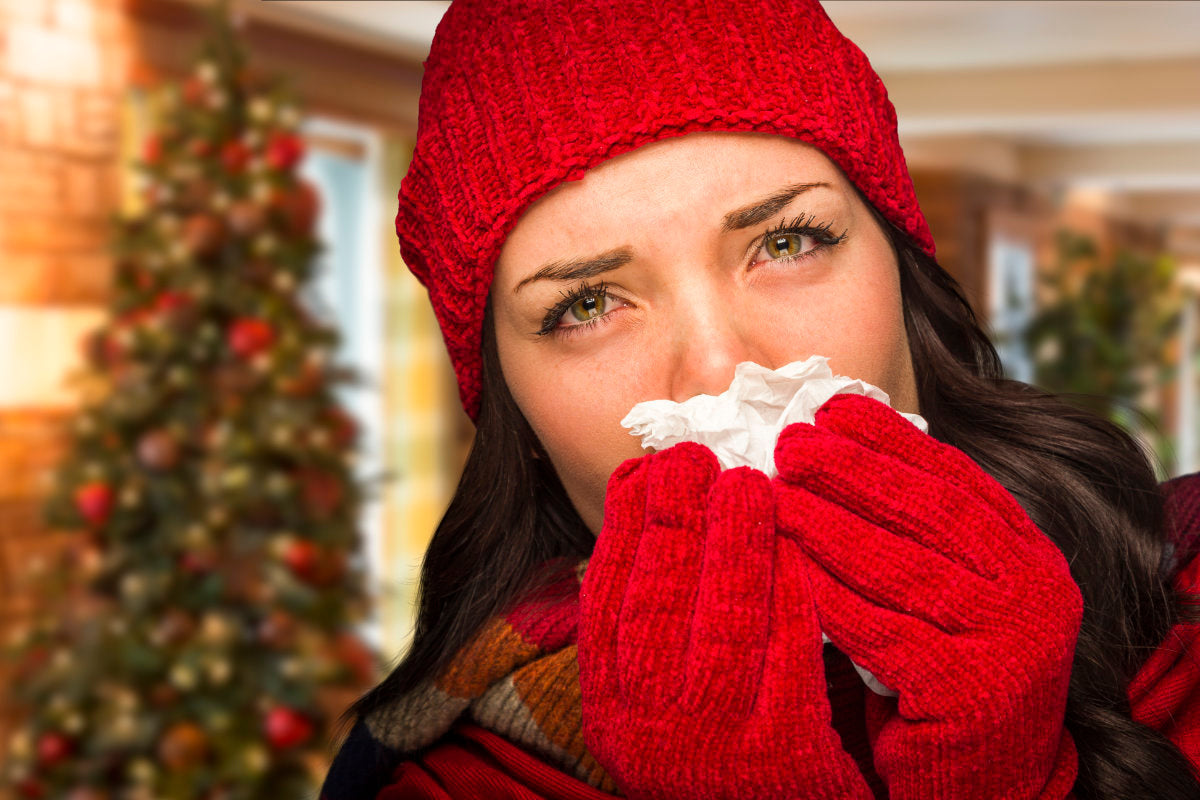
Oh, the joy of the winter holidays! Or maybe not, if you’ll be hosting people with asthma or indoor allergies. For them, even the best gathering can trigger miserable symptoms: sneezing, wheezing, runny nose, burning eyes, coughing, even itchy skin and rashes.
But if you take a little time to learn what provokes their symptoms, you can probably prevent the problems from happening. In this blog we’ll cover:
- Why do only some guests feel “sick” in your home?
- Does boarding your pets remove allergen triggers?
- Can vigorous cleaning remove allergens?
- 8 tips to keep your guests comfortable
Why do only some guests feel “sick” in your home?
Because it brings them into contact with “indoor allergens.” Mostly dust, microscopic mites, pet fur and dander. More than 50 million Americans have indoor allergies. Another 24 million have asthma, including more than 6 million children.
All those folks have an overactive immune system. That means it quickly slips into overdrive when confronted with bio-residual proteins (otherwise known as indoor allergens). Completely harmless to most people, these airborne particles send allergic adults and kids into a full-blown fit of cold-like symptoms. Occasionally, they also experience joint pain, fatigue, headaches, and hives.
Does boarding your pets remove allergen triggers?
About 20% of the worldwide population has a pet allergy. The most common sensitivities are to cat fur and dog dander. If one of your guests is among that 20%, they could find themselves feeling very sick around your fluffy friends.
In the effort to be a gracious host, some people assume boarding their pets will resolve the issue. But even when cats and dogs (and sometimes hamsters, rabbits, birds, and amphibians) are gone, the billions of invisible allergens they’ve shed are still hanging out, often embedded in carpeting, upholstery, and other fabrics throughout your home (think drapery, throw pillows, towels, and bed linen). From there, the allergens are are quickly inhaled by your allergic guests and absorbed through their skin. It won’t take long for their symptoms to rage.
Can vigorous cleaning remove allergens?
No. You can thoroughly clean every square foot of your home but it won’t resolve allergy and asthma issues for your guests. Billions of airborne indoor allergens make their way into absolutely every indoor space, no matter how clean it is. Regardless of whether or not you own pets.
8 tips to keep your guests comfortable
Although it’s impossible to eliminate all indoor allergens, you can dramatically reduce the number of them hiding in your home. Experts say that should be enough to prevent (or at least minimize) symptoms. This holiday season, use the strategies below to make your home more comfortable for your guests with allergies and asthma.
-
Use a HEPA filter. High Efficiency Particle Air (HEPA) filters are highly effective at removing allergens from your carpets and upholstery. Invest in a quality vacuum cleaner that uses HEPA filtration, and vacuum at least twice a week.
You also can use an air purifier with HEPA filtration to remove indoor allergens. Research finds that by running a HEPA air purifier daily, you can eliminate up to 99.97% of airborne allergens in your home!
-
Treat your home with an allergen “neutralizer.” Don’t use pesticide solutions. Made with harsh chemicals, they provoke more asthma and allergy symptoms than they prevent. Instead, neutralize indoor allergens. In other words, deconstruct them at a molecular level. Try our Easy Air Organic Anti-Allergy Spray Lightly mist upholstery, rugs, carpets and drapes to dramatically reduce the allergen count in your home. For overnight guests, use Easy Air Organic Allergy Relief Laundry Rinse to make bedding allergen-free.
-
Bathe pets frequently. If you have pets, bathe them often with an anti-allergen animal shampoo. You can find these products online and in local pet stores. Bathing your animals weekly reduces allergens by 84% in cats and 85% in dogs.
-
Change the litter box frequently. Allergy proteins build up quickly in pet waste. With dogs, this may not be an issue (unless your puppy is still having accidents indoors). However, with cats who use litter boxes, the problem quickly gets out-of control if you go too long between litter box cleanings.
-
Avoid environmental triggers. It can be tempting to start roaring fires in your fireplace during the holiday season. However, it’s best to avoid them because wood fires can contribute to indoor allergies. Only fire up that fireplace if it’s powered by natural gas. (Other environmental triggers that can aggravate allergies and asthma include cigarette smoke, fabric softeners, fresh paint, perfumes, scented candles, room fresheners, and scented laundry rinse.)
-
Eliminate certain types of bedding. Feather pillows can trigger indoor allergen in a big way! Stick to pillows with polyester fill, especially in your guest bedroom. Also, wash your bedding at least once a week in hot water (over 130 degrees Fahrenheit). Then dry it on the hottest possible setting.
-
Skip the Christmas Tree. With its festive lights and ornaments, a Christmas tree is often considered essential to holiday gatherings. But a substance called terpene is found in the sap of these trees, often provoking allergy and asthma symptoms. Some live trees also come with invisible mold spores and pollen on them. Both can cause awful allergy symptoms. If you just can’t imagine the holidays without a tree, then thoroughly rinse and dry yours before bringing it inside.
-
Enjoy the benefits of aromatherapy oils. Essential oil diffusers can actually help deodorize your home and add a festive smell to the air during the holidays. A diffuser can also neutralize some airborne contaminants, clear sinuses, and relieve allergy headaches. The most effective essential oils for these purposes include lavender, peppermint, and tea tree.
Don’t let guests sneeze through the holidays
Allergens are everywhere. Your home is no exception. However, by reducing your home’s indoor allergen count, you can make holiday gatherings a lot more pleasant for your allergic guests. They’ll appreciate you for it!
Take good care. And let me know if you found this post useful.
Kate Vozoff is CEO of Amazing-Solutions, a Lamaze certified childbirth instructor, and a writer with special interest in holistic health.
Sources
- Allergic to your cat? vet.osu.edu. Accessed November 11, 2025.
- Allergic to your dog? vet.osu.edu. Accessed November 11, 2025.
- What are indoor allergies? Thermofisher.com Accessed November 11, 2025
- Dog and Cat Allergies: Current State of Diagnostic Approaches and Challenges. ncbi.nlm.nih.gov. Accessed November 11, 2025.
- Lavender essential oil inhalation suppresses allergic airway inflammation and mucous cell hyperplasia in a murine model of asthma. sciencedirect.com. Accessed November 11, 2025.
- Mentha piperita (peppermint). pubmed.ncbi.nlm.nih.gov. Accessed November 11, 2025.
- Melaleuca alternifolia (Tea Tree) Oil: a Review of Antimicrobial and Other Medicinal Properties. ncbi.nlm.nih.gov. Accessed November 11, 2025.
- Stability of allergens. ncbi.nlm.nih.gov. Accessed November 11, 2025.
- The chemistry of cats: Allergies, catnip and urine. compoundchem.com. Accessed November 11, 2025.
- What is a HEPA filter? epa.gov. Accessed November 11, 2025.
